How to Turn Mistakes into Learning Opportunities
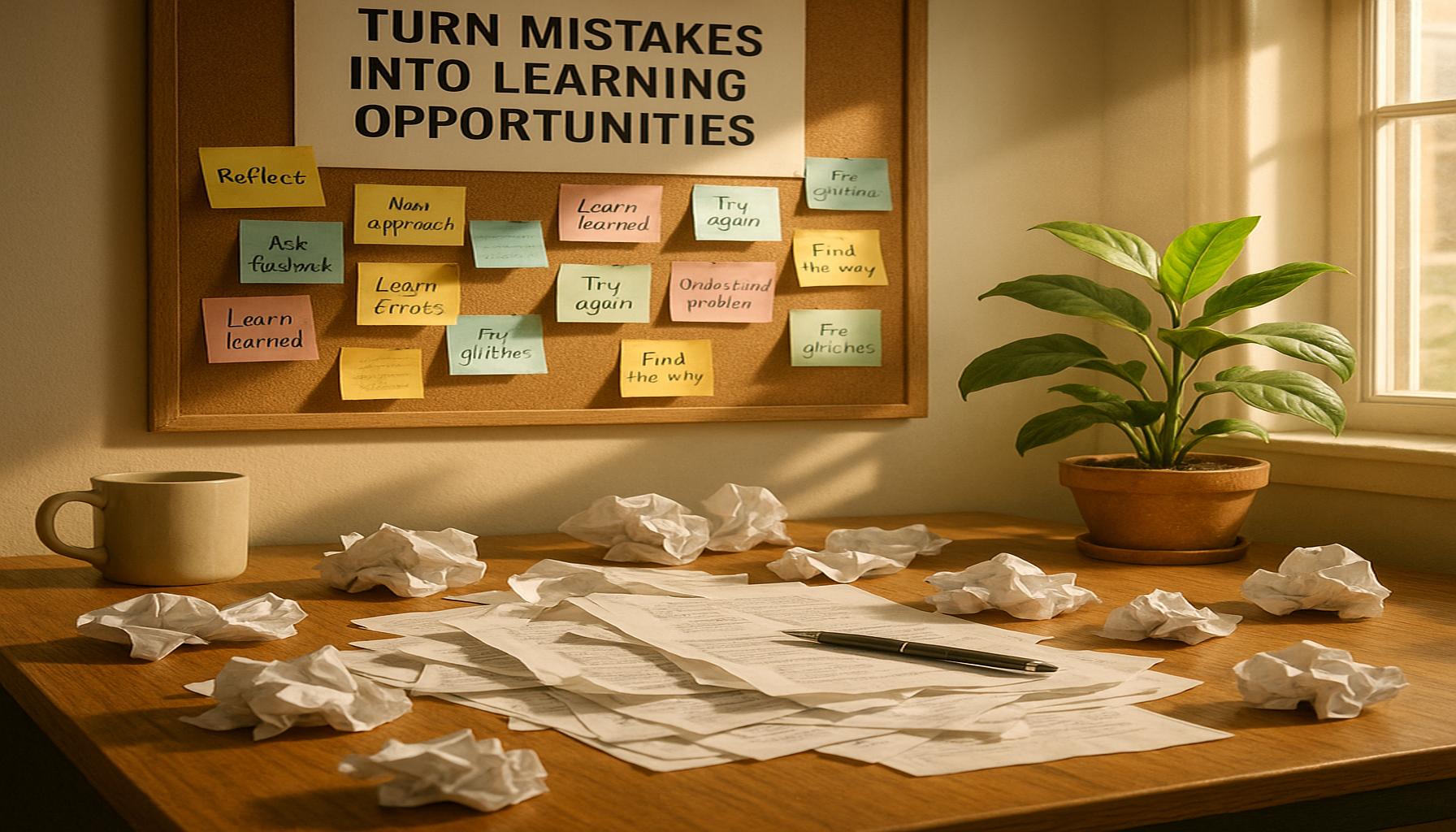
Embracing Mistakes as a Pathway to Growth
Every individual makes mistakes, from students in classrooms to professionals in boardrooms. Rather than viewing these moments as failures, they can be transformed into powerful learning opportunities. A shift in perspective can lead to profound personal and professional development. Recognizing the merits of our missteps can significantly reshape how we navigate our lives and careers.
One of the core benefits of learning from mistakes is that it fosters resilience. Resilience is the ability to bounce back from setbacks, and mistakes serve as crucial learning experiences that build this trait. When we encounter difficulties, we are compelled to adapt and develop coping strategies, equipping us for future challenges. A study from the University of Pennsylvania found that individuals who adopted a growth mindset—those who view capabilities as improvable—demonstrated greater resilience in the face of adversity.
Moreover, grappling with errors enhances our problem-solving skills. Each instance of failure prompts us to analyze what went wrong and investigate alternative solutions. This process strengthens our critical thinking and analytical abilities. For example, a software developer who encounters a bug in their code will not only work on resolving that particular issue but also refine their overall coding practices to prevent similar errors in the future.
In addition, learning from failures can fuel increased creativity. When our initial plans go awry, we are often motivated to think outside the box and generate innovative solutions. This can lead to breakthroughs that would not have been possible without the original mistake. For instance, many famous inventions, like Post-it Notes and the microwave, were born out of unexpected results during other projects.
Many successful figures in American history have turned their blunders into stepping stones. For instance:

- Thomas Edison famously said, “I have not failed. I’ve just found 10,000 ways that won’t work.” His perspective emphasizes the value of experimentation and persistence in achieving innovation.
- J.K. Rowling faced numerous rejections before “Harry Potter” became a global phenomenon. Her perseverance despite setbacks inspires countless writers and dreamers to keep pushing forward.
By analyzing your mistakes, you open doors to new perspectives and ideas. Instead of shying away from errors, embracing them can foster personal growth and lead to unexpected opportunities. From developing a growth mindset to seeking constructive feedback, there are numerous practical strategies for leveraging your setbacks into valuable lessons.
In conclusion, the journey toward success is rarely a straight line. It often winds through challenges and failure. By embracing mistakes, individuals can transform potential setbacks into powerful catalysts for change and innovation. Understanding that the path to mastery is frequently paved with errors can inspire not only resilience and creativity but also a deeper understanding of oneself and one’s goals.
The Power of a Growth Mindset
Transforming mistakes into stepping stones requires a fundamental shift in how we view our failures. Central to this process is the concept of a growth mindset, introduced by psychologist Carol Dweck. Individuals with a growth mindset perceive challenges as opportunities to learn rather than obstacles to overcome. This perspective allows them to embrace mistakes without fear, seeing each misstep as a vital part of their learning journey.
Research by Dweck and her colleagues shows that fostering a growth mindset not only enhances performance but also improves overall resilience. In educational settings, students who adopt this mindset are more likely to take risks, participate actively in class, and persist in the face of adversity. This principle is equally applicable to the workplace, where employees who are encouraged to take calculated risks and learn from their mistakes tend to exhibit higher levels of innovation and job satisfaction.
Identifying Learnings – The Importance of Reflection
One productive strategy for turning mistakes into valuable lessons is reflection. After experiencing a setback, taking the time to assess what went wrong can lead to significant insights. Self-reflection allows individuals to identify patterns in their mistakes, consider alternative actions they could have taken, and gather invaluable feedback. Here are some questions to guide the reflective process:
- What was my initial intent or goal?
- What specific actions contributed to the mistake?
- What could I have done differently to achieve a better outcome?
- What do I now understand that I didn’t before?
By actively engaging in this reflective practice, individuals can extract meaning from their experiences, enhancing not just their skills but also their emotional intelligence. Recognizing the lessons hidden within mistakes can lead to a more profound understanding of personal strengths and areas for improvement.
Seeking Feedback
Another essential component of learning from mistakes is seeking feedback from others. Constructive criticism provides outside perspectives that can shed light on blind spots and provide new strategies for improvement. Whether in academic settings, workplace environments, or personal projects, reaching out for feedback demonstrates a commitment to personal growth. Effective feedback can:
- Highlight areas needing improvement, which can inform future actions.
- Provide validation by recognizing efforts, thereby encouraging perseverance.
- Introduce new techniques or approaches that an individual may not have previously considered.
Moreover, creating a culture of open dialogue around mistakes fosters collaboration and innovation. When teams and organizations embrace a shared learning environment, they cultivate a collective resilience that can lead to breakthrough achievements. By normalizing discussions around errors, employees feel empowered to take risks, knowing that learning—and not punishment—is the ultimate goal.
As we dive deeper into the process of leveraging mistakes for growth, it becomes increasingly clear that missteps can enrich our journeys if only we learn to embrace them. Understanding and implementing a growth mindset, reflecting on our experiences, and seeking constructive feedback are just the starting points in turning mistakes into empowering learning opportunities. The way forward lies in our attitude towards failure and our commitment to continual improvement.
| Category | Benefits of Embracing Mistakes |
|---|---|
| Personal Growth | Transformative experiences promote resilience and adaptability. |
| Enhanced Problem-Solving Skills | Mistakes encourage critical thinking and innovative solutions. |
| Increased Creativity | Experiencing setbacks can inspire new, out-of-the-box ideas. |
| Strengthened Relationships | Sharing failures fosters empathy and collaboration among peers. |
Mistakes can often feel discouraging, but when viewed through the right lens, they become powerful tools for personal development and learning opportunities. Recognizing that errors serve as pivotal moments for growth can alter our perceptions and behaviors significantly. For instance, the ability to embrace challenges leads to stronger resilience and nurtures a mindset geared towards improvement. Additionally, navigating through mistakes enhances our problem-solving skills. By analyzing what went wrong, we can adapt our strategies, leading to more innovative approaches in future endeavors. In creative fields, experiencing setbacks can unlock new levels of creativity, pushing individuals to explore unique avenues and solutions previously unconsidered. Moreover, when shared, these experiences can fortify relationships by fostering a sense of unity and collaboration among colleagues and friends.The journey of turning mistakes into learning opportunities is not just a personal endeavor; it creates a ripple effect, influencing others and enriching our collective experiences. Readers are encouraged to delve deeper into these valuable lessons, exploring how to create a growth-oriented mindset that embraces the inevitable errors along life’s path.
Embracing Vulnerability and Connection
In addition to reflection and feedback, embracing vulnerability plays a crucial role in transforming mistakes into learning opportunities. Admitting errors can feel uncomfortable, yet this act is vital for personal and professional development. When individuals choose to openly discuss their vulnerabilities, they not only foster deeper connections with colleagues and peers but also create an environment of trust. This sharing of experiences diminishes the stigma surrounding failure, prompting others to do the same.
Sociologist Brené Brown’s work emphasizes that vulnerability is not a weakness but rather a pathway to true courage. Her research highlights that when leaders demonstrate vulnerability, they encourage a culture where mistakes are seen as an integral part of the learning process. In contrast, environments that punish errors often lead to fear, which stifles creativity and prompts employees to play it safe rather than innovate.
Utilizing Mistakes as Case Studies
Transforming mistakes into powerful learning moments can also be accomplished by utilizing them as case studies. Organizations can examine failures openly and analyze the contributing factors, decision-making processes, and resultant outcomes. This approach effectively turns theoretical lessons into actionable insights that benefit the entire team. By dissecting mistakes in this manner, teams not only learn from their own experiences but gain valuable perspectives from others’ missteps as well.
For instance, in the tech industry, companies like Google and Amazon regularly hold postmortems after project failures. During these sessions, teams engage in candid discussions about what went wrong, encouraging all team members to share their insights without fear of reprisal. This practice not only leads to better strategies in future projects but also strengthens team cohesion. It shows that every setback is not just a personal failure but a shared learning opportunity that can propel collective growth.
Setting the Right Goals
Another essential factor in turning mistakes into learning opportunities is setting appropriate and realistic goals. By establishing achievable milestones, individuals and teams can better measure their progress, making it easier to identify potential pitfalls along the way. This proactive approach allows for course corrections before mistakes escalate into larger setbacks.
In addition, adopting the SMART (Specific, Measurable, Achievable, Relevant, Time-Bound) goals framework can provide clarity and structure. By clearly defining what success looks like and maintaining flexibility in methods to achieve these objectives, the likelihood of facing mistakes decreases significantly. When setbacks do occur, however, they become part of a larger context of learning rather than frustrating detours.
The link between goal-setting and successful mistake management is reflected in studies conducted across various fields, including education and business. Participants who apply structured methods to establish goals report an increased likelihood of persisting through challenges. When goals are coupled with a growth mindset, reflections, and open communication about mistakes, individuals are equipped to turn every miscalculation into a building block for future success.
As we explore the multifaceted strategies for leveraging mistakes, it becomes evident that embracing vulnerability, analyzing failures as case studies, and setting thoughtful goals are integral components of a learning-oriented mindset. By integrating these practices, individuals and organizations can create an empowering environment where mistakes are not merely obstacles but stepping stones toward continuous improvement.
Conclusion: The Transformative Power of Mistakes
In conclusion, the journey of transforming mistakes into valuable learning opportunities is not only achievable but essential for personal and organizational growth. Embracing vulnerability fosters a culture of trust, allowing individuals to openly discuss their challenges without fear of judgment. This openness not only strengthens bonds among colleagues but also encourages an environment where innovation can flourish.
By utilizing mistakes as case studies, organizations can dissect failures and extract actionable insights that enhance collective knowledge. Companies like Google and Amazon exemplify this approach through postmortem analyses, ensuring that every setback is converted into a stepping stone for future success. Furthermore, establishing SMART goals equips individuals and teams with the necessary framework to navigate their paths effectively, making it easier to identify potential challenges early on and learn from them.
The intersection of vulnerability, reflective practices, and goal-setting embodies a growth mindset. This perspective transforms what could be seen as failures into rich learning experiences. As you move forward, remember that mistakes are not a dead end; they are an integral part of the learning process. By adopting these strategies, individuals can unlock the transformative potential of their missteps, using every error as a catalyst for innovation and improvement.
In a world driven by rapid change, the ability to learn from mistakes will be one of your most valuable assets. Embrace it fully, and watch as you turn challenges into opportunities for growth and success.
Related posts:
How Grit and Effort Contribute to the Development of a Growth Mindset
The Psychology of Mistakes: How a Growth Mindset Can Help
Grit vs. Talent: What Really Matters?
Growth Strategies: Learning from Mistakes
Overcoming the Fear of Failure: The Importance of Accepting Mistakes
Reflection Techniques: What Mistakes Can Teach Us

Linda Carter is a writer and growth mindset specialist with expertise in cognitive development and resilience training. With extensive experience helping individuals transform limiting beliefs and unlock their potential, she shares practical mindset strategies on our platform. Her goal is to empower readers with science-backed techniques to cultivate adaptability, embrace challenges, and achieve continuous personal and professional growth.