Errors as Steps to Success: Inspiring Stories
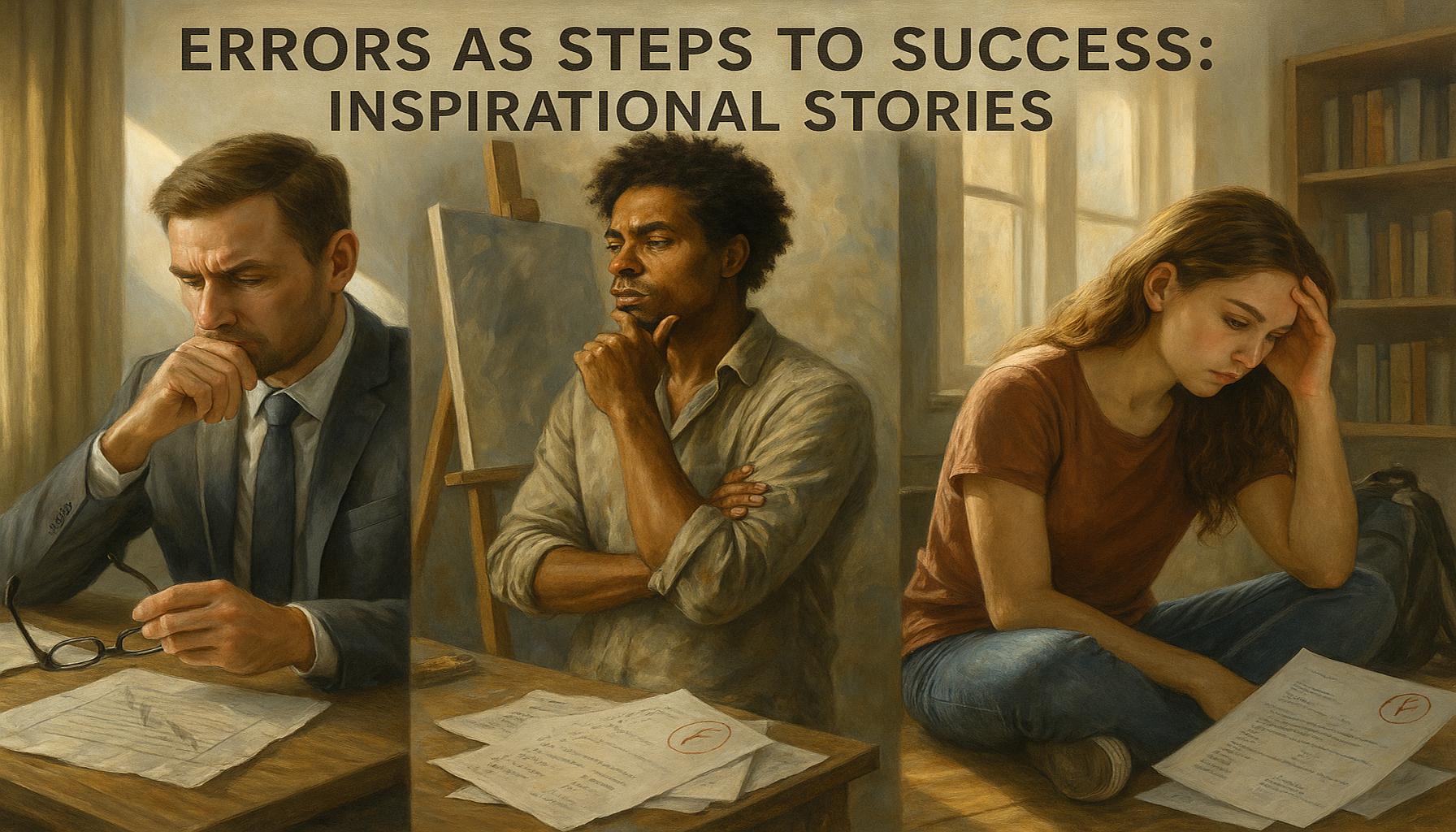
Embracing the Journey of Growth
Throughout history, some of the most remarkable achievements stem from failure and setbacks. Many successful individuals encountered significant errors on their path, using these experiences to fuel their ambitions. This relationship between failure and success is not merely inspirational; it is a cornerstone of progress in various fields. By examining the lives and experiences of those who have faced adversity, we can uncover how reframing mistakes can pave the way to future achievements.
Notable Examples of Transformation
- Albert Einstein: Before becoming a household name and revolutionizing physics with his theory of relativity, Einstein struggled academically. His teachers dismissed his potential, and he failed his entrance examination to the Polytechnic Institute in Zurich. These early challenges did not deter him; rather, they fueled his determination to prove others wrong and solidified his innovative thinking.
- J.K. Rowling: The author of the beloved Harry Potter series faced a long journey marked by 12 rejections from publishers before one took a chance on her. Living in near poverty as a single mother, she used her personal struggles as inspiration for her writing. Rowling’s tenacity transformed her initial setbacks into a globally celebrated phenomenon that has sold over 500 million copies and spawned a massive entertainment franchise.
- Thomas Edison: Famous for his invention of the light bulb, Edison’s path to success involved conducting over a thousand failed experiments. Each failure provided him with valuable insights that helped refine his approach to inventing. His unwavering belief in the power of hard work and persistence led him to famously state, “I have not failed. I’ve just found 10,000 ways that won’t work,” embodying a mindset that views failure as an integral part of the process.
These figures not only illustrate resilience but also highlight that each error is a building block for future success. By embracing our mistakes, we cultivate creativity and adaptability—traits essential for achieving our goals in both personal and professional realms. Failure is not the end; rather, it is a necessary step toward growth.
The Transformative Power of Mistakes
Understanding how to turn failures into lessons includes recognizing the following key features:
- Learning from experience: Each setback provides lessons and insights that can inform future decisions. This reflective practice ensures that we don’t repeat the same mistakes, fostering continuous improvement.
- Developing perseverance: Embracing failure helps build resilience. The process of overcoming obstacles strengthens our ability to face new challenges with a more robust mindset.
- Encouraging innovative thinking: Many breakthroughs arise from the willingness to experiment and take risks. Mistakes can spark creative solutions that would not have been apparent without the initial failure.
As we delve deeper into the narratives behind these transformative journeys, we uncover that every misstep is a step toward achievement. This exploration is not just about celebrating the end results; it’s about valuing the journey deeply. By collectively recognizing our own experiences with failure, we empower ourselves to cultivate a more resilient and innovative mindset. So, where do we begin? Let’s embark on this exploration together and discover how to effectively harness the power of our own experiences!
Lessons in Resilience
In the face of challenges, the concept of viewing errors as steps to success emerges as a transformative perspective. Numerous successful people across various fields have encountered failure, yet these very experiences have become fundamental to their eventual triumphs. Understanding how they navigated their missteps not only sheds light on their journeys but also inspires others to embrace the learning opportunities that come with failure.

Recognizing the Importance of Adaptability
Cultivating a mindset that values adaptability is crucial for personal and professional growth. When individuals confront mistakes, they often discover new pathways and avenues for improvement. Here are some notable examples of how embracing error has led to significant breakthroughs:
- Steve Jobs: The co-founder of Apple faced public criticism and was ultimately ousted from the company he helped create. Rather than succumbing to despair, Jobs used this setback to embark on a new venture, NeXT, which later provided groundbreaking technology that contributed to Apple’s resurgence. His experience teaches that sometimes, stepping back can lead to a more powerful leap forward.
- Walt Disney: Before becoming a legendary figure in entertainment, Disney encountered numerous failures, including the bankruptcy of his first animation studio. Instead of giving up, he persevered and eventually created Mickey Mouse, a character that would change the animation industry forever. His vision exemplifies that embracing risk is essential to pushing creative boundaries.
- Missy Elliott: As a trailblazer in the hip-hop industry, Elliott faced harsh criticism and societal barriers as a woman in a male-dominated field. Instead of being disheartened, she channeled her struggles into her music, leading her to become one of the most influential artists of her time. Elliott’s journey emphasizes that perseverance in the face of adversity can yield extraordinary results.
These compelling narratives highlight an essential truth: each mistake can serve as a catalyst for significant growth. By reshaping our perception of failure, we begin to see it as a natural part of the creative process rather than a definitive end. In doing so, we foster an environment where innovation thrives and boundaries are pushed.
Navigating the Path Forward
To fully embrace errors as steps to success, individuals should focus on several key strategies:
- Self-reflection: Taking the time to analyze what went wrong can provide invaluable insights that inform future decisions. This practice encourages accountability and empowers individuals to learn from their experiences.
- Setting realistic goals: Acknowledging that failure is a part of the journey encourages more attainable objectives. By setting achievable milestones, individuals can build confidence and simultaneously reduce the fear of failing.
- Seeking support: Surrounding oneself with supportive peers and mentors can aid tremendously in navigating through difficult times. Sharing experiences and learning from others can provide motivation and new strategies to approach challenges.
As we explore the depths of these inspiring stories, it becomes clear that every error can indeed lead to unforeseen opportunities. The journey toward success is not linear; it is a tapestry woven with the threads of both failure and triumph. Embracing this notion allows us to recognize that each setback can be a stepping stone toward a more fulfilling destination.
| Category | Advantages |
|---|---|
| Personal Growth | Transforming setbacks into opportunities for self-improvement and resilience. |
| Motivational Inspiration | Real-life stories of overcoming challenges motivate others to take action in their own lives. |
Examining how errors can serve as stepping stones to success reveals a compelling narrative that resonates deeply with audiences. The category of personal growth emphasizes the ability of individuals to turn mistakes into lessons, enhancing their emotional and intellectual resilience. It is through these experiences that many discover their strength and uncover principles that guide their future decisions.Additionally, the motivational inspiration category showcases how the tales of those who have turned failures into victories can uplift others. These stories not only depict struggle but also illustrate the power of perseverance, serving as a beacon of hope for those grappling with their challenges. They ignite a spark, urging individuals toward action and motivating them to believe that their triumphs are just as attainable. The journey from error to success is often paved with rich lessons and insights, waiting to be uncovered and celebrated.
Transforming Challenges into Opportunities
The road to success is often paved with missteps, and those who learn to navigate these bumps along the way develop resilience that sets them apart. What separates a successful comeback from a fleeting setback is the ability to harness the lessons embedded within mistakes. The stories of others can serve as powerful reminders that failure often precedes success and can lead to breakthroughs that would have been otherwise unattainable.
Empowering Through Failure
The iconic author J.K. Rowling provides a quintessential example of leveraging failure for success. Before achieving worldwide fame with the Harry Potter series, Rowling faced numerous rejections from publishers. Despite being a single mother living on welfare, she remained steadfast in her vision. Rowling’s ability to view rejection as a stepping stone rather than a final verdict ultimately resulted in a publishing phenomenon, making her one of the most successful authors in history. This highlights the essential lesson that perseverance combined with a positive outlook can yield monumental results.
Similarly, the tale of Thomas Edison resonates profoundly in the context of errors leading to success. Renowned for inventing the light bulb, Edison famously stated, “I have not failed. I’ve just found 10,000 ways that won’t work.” His relentless pursuit of innovation and refusal to perceive failure as an endpoint allowed him to revolutionize the world of technology. By viewing his experiments as necessary steps in a learning process, he demonstrated that each failure brought him closer to his ultimate success.
Innovation through Mistakes
The tech industry, with its rapid evolution, is rife with instances where errors have sparked miraculous innovations. Google’s early years are illustrative of this phenomenon. The company famously faced challenges with its search algorithms, leading to buggy search results that frustrated users. However, these errors prompted a culture of constant improvement and adaptation, allowing Google to become the powerhouse it is today. The key takeaway here is that initial failures can lead to enhancements that create competitive advantages.
Another inspiring story comes from Sara Blakely, the founder of Spanx. Blakely’s journey began with a failed attempt to create a different product, but this setback pushed her to innovate within the realm of shapewear. With limited resources and no formal training, she faced rejection and doubt but remained focused on refining her vision. Today, Spanx has transformed the fashion industry and turned Blakely into a billionaire. Her experience illustrates that emerging from failure with creativity can lead to groundbreaking ideas.
The Role of Community and Collaboration
Though individual grit and determination are vital, the influence of community cannot be overlooked. Gathering insights from peers can enhance the understanding of past mistakes. Oprah Winfrey, an emblematic media mogul, faced public scrutiny and personal crises, but she also attributes much of her success to the mentors and collaborators who supported her through tough times. Building a network that is not afraid to share its stories of failure can create an empowering environment where others feel encouraged to take risks.
As these stories reveal, errors should not be seen merely as setbacks, but as opportunities to refine skills, challenge perceptions, and foster creativity. The lessons learned from failures not only empower individuals but also contribute to a broader culture that values resilience, innovation, and collaboration. These narratives serve as testaments to the fact that, in the end, every error can contribute to a greater purpose.
Conclusion: Embracing Errors on the Journey to Success
In today’s fast-paced world, the stories of those who have triumphed over failures serve as a beacon of hope and inspiration. From J.K. Rowling’s unwavering determination amidst rejection to Thomas Edison’s relentless pursuit of innovation, these narratives remind us that failure is often a prelude to success. Each misstep is not merely an obstacle but a valuable opportunity to learn, adapt, and ultimately excel.
The examples highlighted here illustrate that embracing errors fosters an environment where innovation thrives. Take Sara Blakely, who transformed her setbacks into pioneering ideas in the fashion industry, or Google, which turned initial failures into a commitment to ongoing improvement and success. These stories underscore the vital role of resilience and creativity in navigating challenges.
Moreover, the importance of community cannot be understated. Support from mentors and peers can illuminate paths that are obscured by doubt and fear of failure. By sharing experiences and insights, we create a collective narrative that embraces risk-taking and innovation, ultimately leading to personal and societal growth.
As we reflect on these inspiring tales, let us recognize that errors are not the end of the journey but fundamental steps towards achieving our dreams. By adopting an attitude that welcomes mistakes as part of the learning process, we can pave the way for success not just for ourselves but for generations to come. In this sense, every error is indeed a step towards a greater purpose.

Linda Carter is a writer and growth mindset specialist with expertise in cognitive development and resilience training. With extensive experience helping individuals transform limiting beliefs and unlock their potential, she shares practical mindset strategies on our platform. Her goal is to empower readers with science-backed techniques to cultivate adaptability, embrace challenges, and achieve continuous personal and professional growth.